
Thermic Fluid Heater Manufacturer
Durga Boilers & Engineering Works is a manufacturer and supplier of industrial heating equipment, including thermic fluid heaters. A thermal fluid heater works through a closed-loop circulation system. The thermal fluid is heated inside the heater and then circulated through pipelines to process equipment. After transferring its heat, the fluid returns to the heater and is heated again. This continuous cycle helps provide uniform heating for different industrial applications. Depending on the design, thermic fluid heaters can be available with different fuel options, capacities, temperatures, and automation arrangements.
Thermic Fluid Boiler Manufacturers, Suppliers in India
A thermic fluid boiler is commonly used when an industrial process needs circulating thermal oil or another suitable heat-transfer fluid. In contrast, a steam boiler heats water to produce steam, which is then distributed through a steam network. Thermic fluid heating can be particularly useful when an application requires consistent high-temperature indirect heating with a closed-loop circulation arrangement. Steam systems may be preferable for processes specifically designed around steam.
Therefore, industries should consider operating temperature, process requirements, heating load, available fuel, equipment configuration, and maintenance requirements before selecting between different fluid heaters and boiler systems.
Features of Our Thermic Fluid Heater
Some key features include:
- High thermal efficiency with lower fuel consumption
- Uniform heat distribution for consistent production
- Heavy-duty construction for longer service life
- Low maintenance and easy operation
- Compact and space-saving design
- Safe operation with advanced control systems
- Available in oil-fired, gas-fired, coal-fired, wood-fired, and biomass-fired models
- Custom-built capacities according to industrial requirements
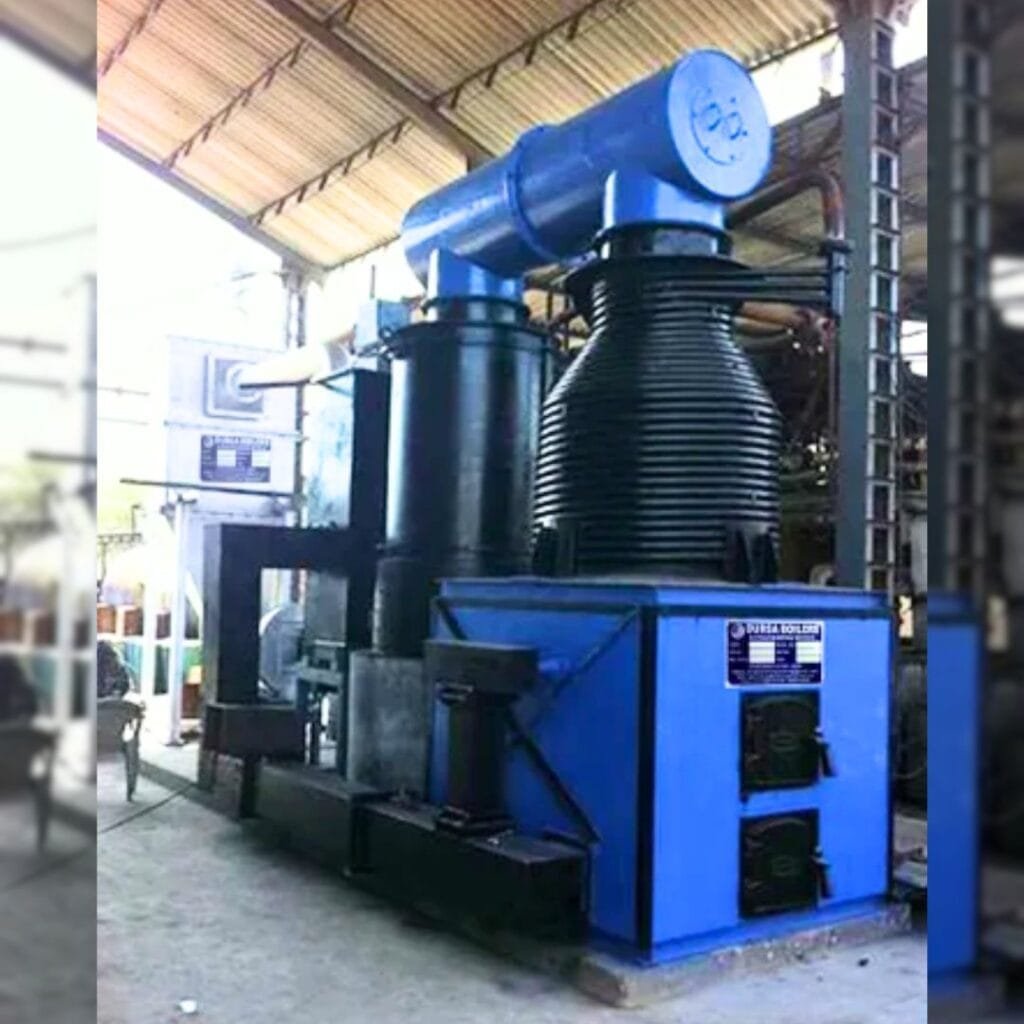
Specifications of Thermic Fluid Heater
| Specification | Details |
| Capacity | Customizable |
| Fuel | Diesel/Gas/Biomass |
| Temperature | Up to 350°C |
| Pressure | Low |
| Efficiency | High |
| Construction | Steel |
| Operation | Automatic |
| Heating | Indirect |
| Insulation | Mineral Wool |
| Application | Industrial |
Thermic Fluid Heater Price in India
The thermic fluid heater price depends on several factors, including heating capacity, fuel type, operating temperature, automation level, and material of construction. Industries requiring efficient and reliable heating systems should focus on overall performance, fuel efficiency, and long-term operating costs rather than only the initial investment. The thermic fluid heater Price List depends on several technical specifications, including heating capacity, fuel type, automation level, burner configuration, insulation quality, and customized design requirements.
A thermic fluid heater can be an effective solution for industrial processes that require continuous, indirect, and controlled heating. Its closed-loop thermal fluid circulation provides a practical way to transfer heat to reactors, dryers, ovens, presses, tanks, and other process equipment. The right heater should always be selected according to the required temperature, heating capacity, fuel availability, process design, and operating conditions.
Durga Boilers can offer thermic fluid heating systems for different manufacturing applications. A carefully selected and properly installed thermal fluid heater can support consistent process heating, efficient operation, and dependable long-term performance.
Frequently Asked Questions:
A Thermic Fluid Heater is an industrial heating system that transfers heat through thermal oil.
It heats thermic fluid in a closed-loop system and circulates it to transfer heat to industrial processes.
They are used in chemical, food processing, textile, pharmaceutical, and other manufacturing industries.
It offers efficient, uniform heating at high temperatures with reliable temperature control.
Depending on the design, it can operate using gas, diesel, biomass, coal, or electricity.
Regular inspection, thermic fluid testing, cleaning, and checking pumps and safety controls help maintain efficient performance.