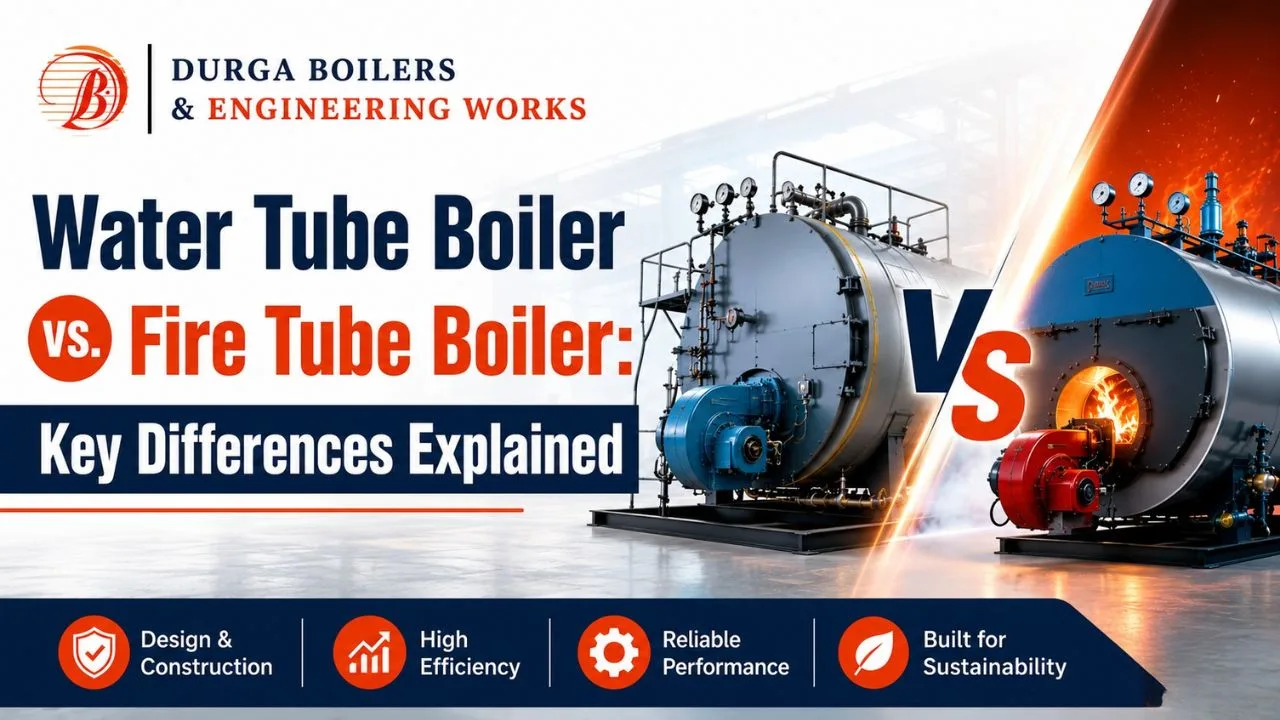
Durga Boilers has established itself as a trusted name in the boiler industry by delivering reliable and efficient steam boiler solutions for various industrial applications. When selecting a boiler for industrial use, one of the most common questions engineers and plant operators ask is about the difference between water tube boiler and fire tube boiler. Understanding their working principles, advantages, and applications can help businesses choose the right boiler for their operational requirements.
Both boiler designs serve the same purpose—producing steam—but their construction and performance characteristics differ significantly.
What Is a Fire Tube Boiler?
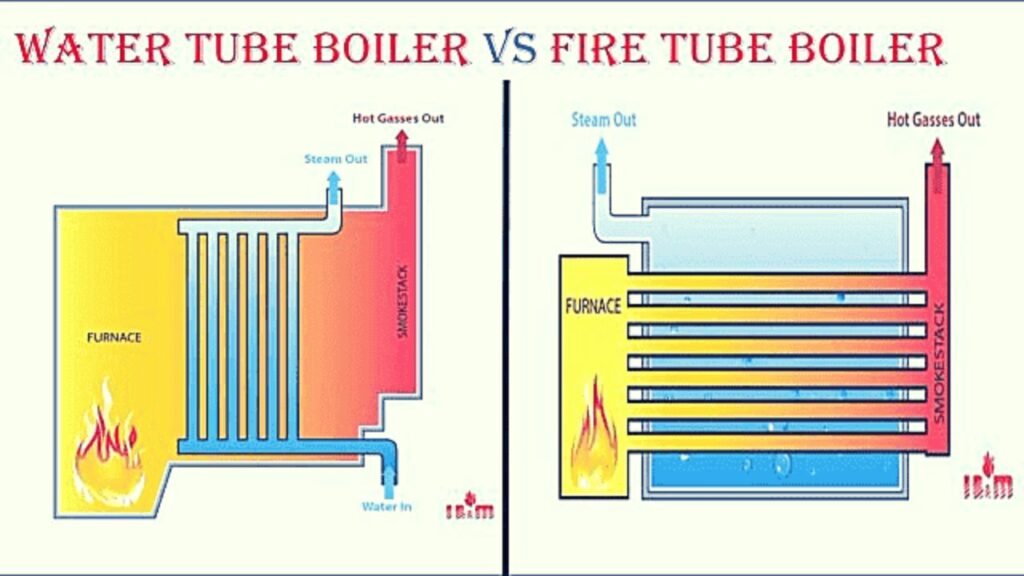
A fire tube boiler is a type of boiler in which hot combustion gases pass through tubes while water surrounds these tubes inside a shell. Heat from the gases is transferred to the water, generating steam. A typical fire tube boiler diagram shows a large cylindrical shell filled with water and multiple tubes carrying hot flue gases.
Key Features of Fire Tube Boilers:
- Simple design and operation
- Lower initial investment
- Easy maintenance
- Suitable for low and medium-pressure applications
- Compact installation requirements
Fire tube boilers are widely used in food processing, textile units, hotels, and small manufacturing facilities.
What Is a Water Tube Boiler?
A water tube boiler operates on the opposite principle. In this design, water flows through tubes while hot combustion gases circulate around the outside of the tubes. The water tube boiler and fire tube boiler comparison often begins with this fundamental design difference. Water tube boilers are generally preferred in large industrial facilities where high-pressure and high-capacity steam generation is required.
Key Features of Water Tube Boilers:
- High steam generation capacity
- Suitable for high-pressure operations
- Faster steam production
- Better thermal efficiency
- Ideal for large industrial applications
Industries such as power generation, chemical processing, refineries, and heavy manufacturing commonly use water tube boilers.
Difference Between Water Tube Boiler and Fire Tube Boiler
Understanding the difference between water tube boiler and fire tube boiler helps businesses select equipment that aligns with their operational needs.
1. Construction Design
- In a fire tube boiler, hot gases move inside the tubes while water surrounds them.
- In a water tube boiler, water flows inside the tubes while hot gases circulate around the tubes.
2. Steam Pressure
- Fire tube boilers are generally suitable for low to medium steam pressures.
- Water tube boilers can operate at much higher pressures, making them ideal for large industrial processes.
3. Steam Generation Capacity
One major difference between water tube boiler and fire tube boiler is steam output.
- Fire tube boilers are suitable for smaller capacities.
- Water tube boilers can produce significantly larger volumes of steam.
4. Efficiency
- Water tube boilers generally offer higher thermal efficiency due to better heat transfer characteristics.
- This makes them more suitable for industries with continuous steam requirements.
5. Startup Time
- Water tube boilers generate steam more quickly because they contain less water within the system.
- Fire tube boilers typically require longer startup times.
6. Safety
- Since water tube boilers contain smaller quantities of water, the risk associated with pressure-related failures is often lower.
- This safety advantage is another important difference between fire tube and water tube boiler systems.
Water Tube Boilers vs Fire Tube Boilers
| Parameter | Water Tube Boiler | Fire Tube Boiler |
|---|---|---|
| Working Principle | Water flows inside tubes and hot gases surround them. | Hot gases flow inside tubes and water surrounds them. |
| Steam Pressure | Suitable for high-pressure applications. | Suitable for low to medium-pressure applications. |
| Steam Generation Capacity | Produces large quantities of steam. | Produces moderate quantities of steam. |
| Efficiency | Higher thermal efficiency and faster steam generation. | Lower efficiency compared to water tube boilers. |
| Applications | Power plants, refineries, and chemical industries. | Food processing, textile units, hotels, and small industries. |
Fire Tube and Water Tube Boiler Applications
The selection between a fire tube and water tube boiler depends largely on the intended application.
Common Applications of Fire Tube Boilers:
- Food processing plants
- Hotels and hospitals
- Textile industries
- Dairy plants
- Small manufacturing units
Common Applications of Water Tube Boilers:
- Thermal power plants
- Petrochemical industries
- Refineries
- Paper mills
- Chemical processing plants
The choice between a fire tube and water tube boiler should always be based on steam demand, operating pressure, and long-term operational goals.
Fire Tube Boiler Diagram and Working Principle
A fire tube boiler diagram typically includes:
- Furnace
- Fire tubes
- Boiler shell
- Steam space
- Chimney
- Water storage area
The working principle is simple. Fuel is burned in the furnace, producing hot gases. These gases travel through the fire tubes surrounded by water. Heat transfers from the gases to the water, generating steam that is collected for industrial use.
This straightforward design contributes to the popularity of fire tube boilers in smaller industries.
Why Choose Durga Boilers?
At Durga Boilers, we understand that every industry has unique steam generation needs. We offer high-quality boiler solutions designed for performance, reliability, and energy efficiency. Our team helps customers evaluate the advantages of both water tube boiler and fire tube boiler systems and select the most suitable equipment for their operations. We continue to support businesses with dependable boiler technologies and professional guidance.
The difference between water tube boiler and fire tube boiler lies primarily in their construction, efficiency, pressure handling capability, and steam output. While fire tube boilers are ideal for smaller applications, water tube boilers are designed for high-capacity industrial operations. By understanding the key distinctions between fire tube and water tube boiler systems, businesses can make informed investments that improve productivity, efficiency, and long-term operational performance. Whether you require a compact steam solution or a high-capacity industrial boiler, selecting the right technology is essential for achieving optimal results.